
Responsible AI Education for Clinicians
Simulation training for clinicians who work with AI.
Pilots don't learn to handle an autopilot failure at 30,000 feet. They learn it in the simulator, again and again, until the right response is automatic. Clinicians deserve the same preparation for the AI now running through every chart, alert, and note.
Designed for clinical judgment, patient safety, and responsible implementation.
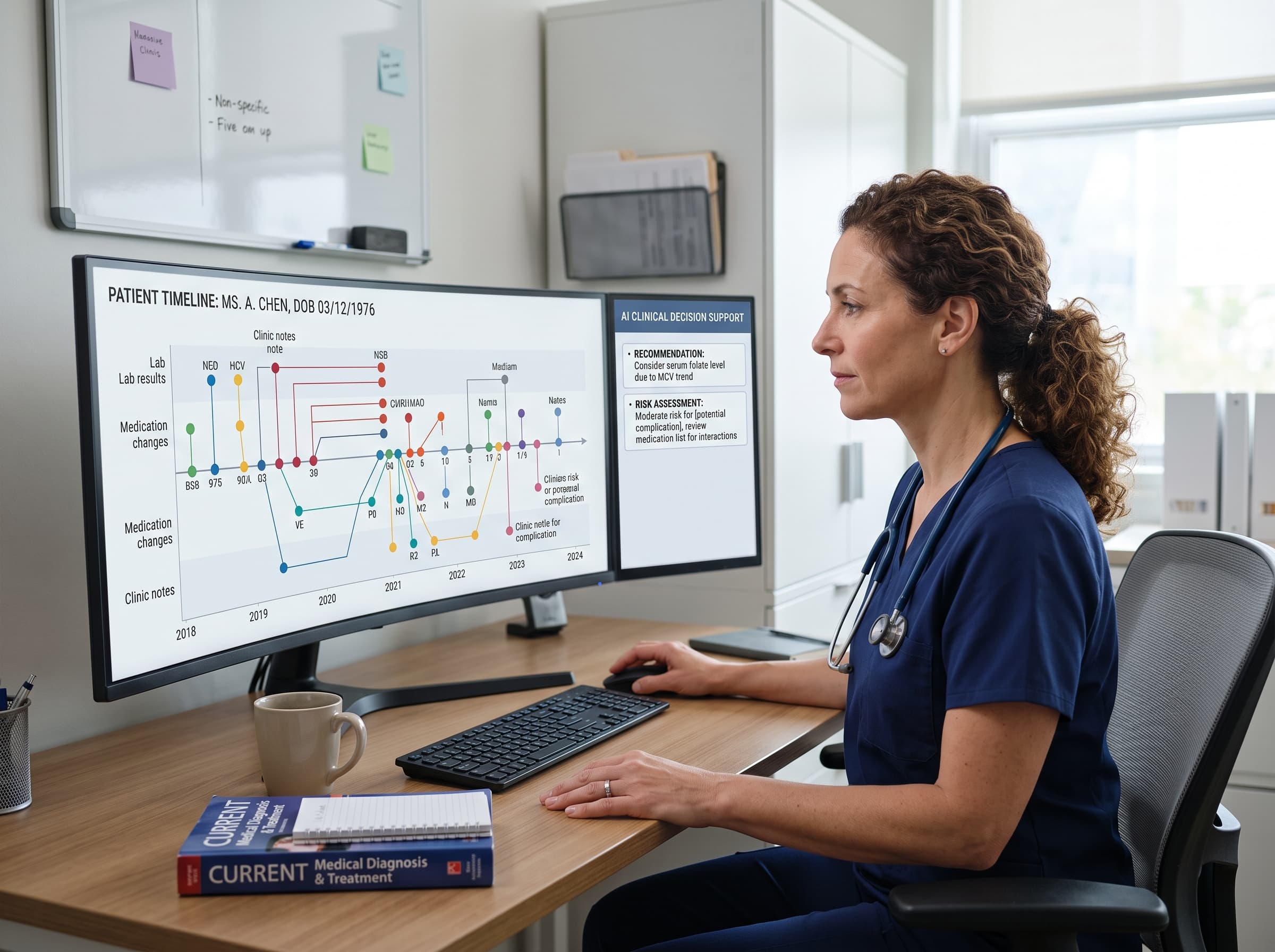
Responsible AI use is a clinical skill
AI can be wrong, incomplete, context-blind, or used beyond its intended purpose. The safer question isn't whether to trust or reject it. It's this:
What must a clinician do to use AI responsibly for this patient, in this moment, with this information?
The old patternFlight Deck Medicine pattern
“The system is confident, so it must be right.”
Confidence is information, not patient-specific certainty.
“AI gave the recommendation; I followed it.”
I evaluated the recommendation in clinical context and retained responsibility for the decision.
“We will investigate later.”
We stabilize the patient, document the facts, and route the system concern for review.
“This is only a technology issue.”
This is a clinical, ethical, human-factor, and systems-safety issue.
Train for the decisions that matter
Focused modules
Build from foundational AI literacy to integrated, high-stakes clinical decision-making.
Multimodal learning
Short video briefings, concise flight manuals, expert podcasts, checklists, and realistic cases.
Scenario practice
Apply each concept in interactive clinical situations where the AI output may be helpful, incomplete, or wrong.
Assessment pathway
Progress from knowledge checks to a readiness exam, final written exam, and performance-based clinical-AI checkride.
Digital flight log
Keep a record of progress, completed scenarios, feedback, reference cards, and renewal status.
"Human in the loop" only works if the human is ready.
A clinician who has never practiced catching an AI error is not a safety system. They are a signature. Flight Deck Medicine turns the human in the loop into a human in command: someone who knows when to trust the machine, when to challenge it, and how to act on that judgment with confidence.
Check the instruments
Understand what the AI used, what it did not use, and whether the output fits the patient and purpose.
Cross-check the clinical picture
Compare the AI output with primary data, bedside findings, patient goals, and independent sources of evidence.
Take command when needed
Accept, defer, or override the recommendation with a clear clinical rationale and appropriate escalation.
Log and learn
Document the decision and communicate system concerns so care teams and organizations can improve.
Briefing. Practice. Checkride.
Each module uses the same reliable learning pattern. Begin with a focused briefing, study the practical flight manual, hear an expert cockpit conversation, apply the skill in a scenario lab, and reinforce it with a brief knowledge check. By the time you reach the final checkride, the workflow is familiar, even when the case is not.
- 01
Briefing
Focused video primer introducing core decision rules.
- 02
Flight Manual
Concise clinical guide and practical reference charts.
- 03
Cockpit Conversation
Expert dialogue dissecting real-world reasoning.
- 04
Scenario Lab
Interactive clinical case with live AI interaction.
- 05
Knowledge Check
Brief reinforcement verifying retention and safety rules.
- FINAL
Checkride
Final performance-based clinical-AI evaluation.
Built for clinicians and the organizations that support them.
Practicing clinicians
Physicians, nurses, advanced practice providers, and pharmacists who already work alongside AI tools and want to use them safely.
Residency and training programs
Build AI proficiency into training before habits form, not after.
Health systems
Prepare your workforce before a new AI tool goes live. Gain evidence that clinicians are equipped to oversee the systems you deploy.
Pilots don't fly a new aircraft until they've flown the simulator.
Explore the curriculum, review the certification pathway, and begin building safer AI habits for clinical practice.